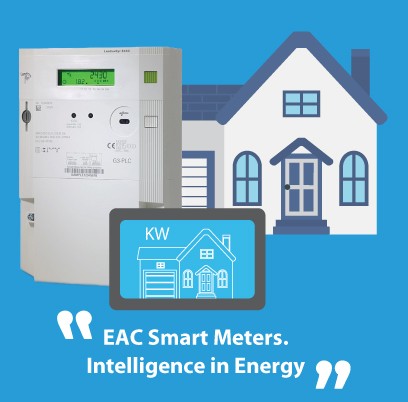
What are Smart Meters?
Smart meters are electronic devices that, beyond measuring electricity consumption, offer additional functionalities, primarily providing information to consumers and EAC. They form the foundation of an intelligent energy measurement infrastructure and play a key role in the transition from passive to smart grids. The installation project for smart meters will contribute to modernising the network, aiming to enhance the services offered to consumers. Smart meters are an essential tool for consumers, bringing simplicity, speed and confidence in managing electricity usage to help reduce their final bill costs.

What are the benefits of using smart meters?
- Consumers have immediate access to their daily electricity consumption information, allowing them to adjust their energy behavior to save energy and reduce bill costs.
- Utilising advanced pricing systems from various electricity providers will enable consumers to save money by shifting electrical loads (e.g., washing machines, water heating, etc.) from peak to off-peak hours when the per kilowatt cost is lower.
- Electricity bills will be issued timely and accurately based on actual consumption data rather than estimates.
- Faults are more easily detected and power supply restoration is faster.
- Prepaid energy options are available, particularly useful for properties rented to multiple parties for short periods.
- Cases of electricity theft are prevented and detected.

Is there a cost for the consumer?
Consumers will not incur any financial cost for switching from a conventional meter to a smart meter. For this project, the EAC has secured up to €35 million in funding from the European Union’s Recovery and Resilience Facility.
How will the transition from conventional to smart meters be carried out?
For approximately three years, EAC crews will work intensively on a daily basis, both during and outside working hours (including weekends), to replace existing conventional meters with smart meters in premises (residential, small commercial, and industrial) that are billed bi-monthly. The EAC will regularly update the public on the areas where crews will be active. For safety reasons, the power supply will be interrupted for a period not expected to exceed 20 minutes, during the installation of the new meter.
How many smart meters will be installed and when?
According to the project timeline, it is expected that by 2028, at least 500,000 smart meters will be installed nationwide. The rollout will begin in urban areas in early 2025.